In the heat of national elections, we seem divided into the
right/the wrong, the good/the bad, the Republicans/the Democrats. But in
reality, our political dispositions are such a tiny part of who we are, and we
all have some undeniable things in common.Monday, September 3, 2012
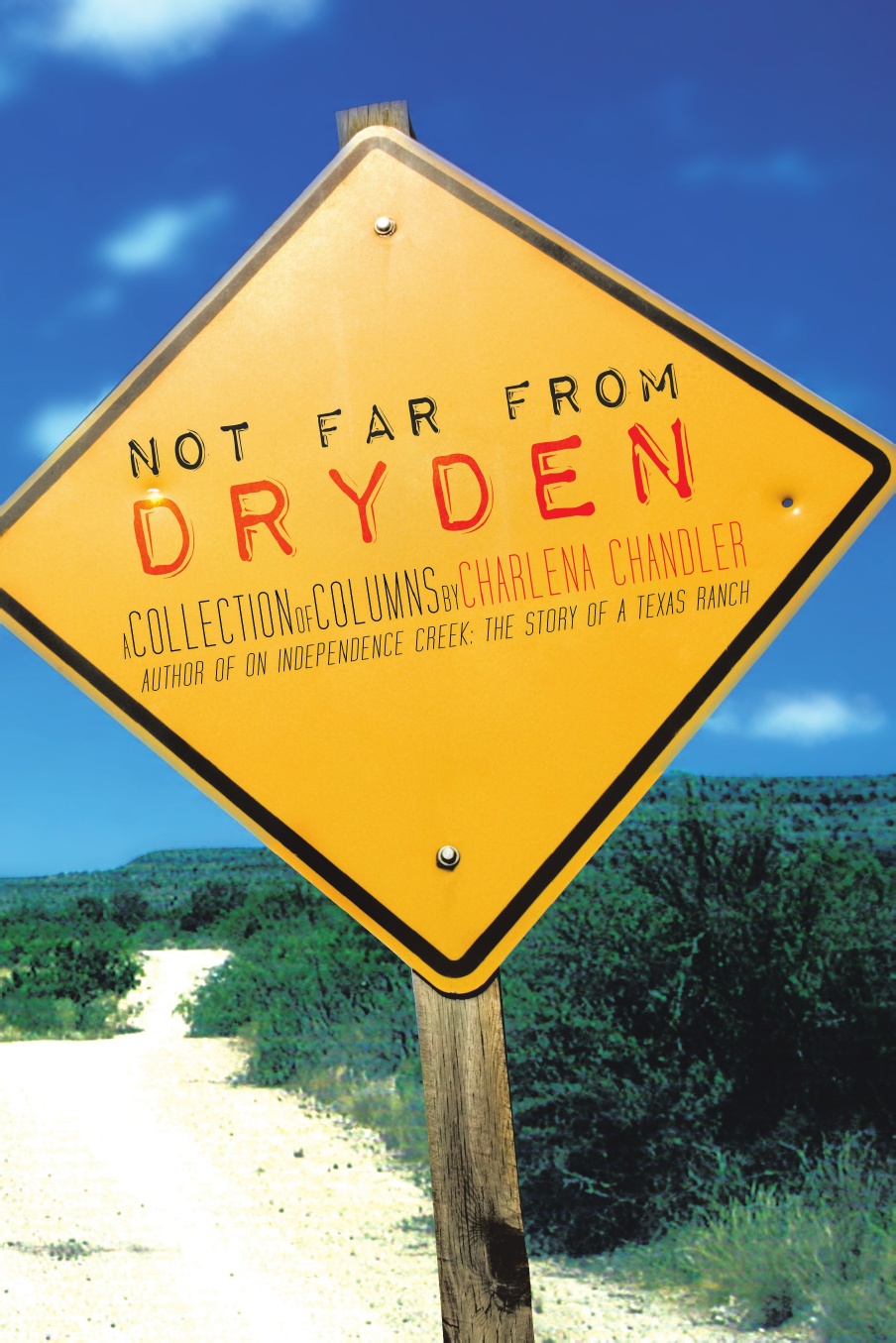
Not far from Dryden: A Collection of Columns by Charlena Chandler
In the heat of national elections, we seem divided into the
right/the wrong, the good/the bad, the Republicans/the Democrats. But in
reality, our political dispositions are such a tiny part of who we are, and we
all have some undeniable things in common.
This issue came to mind as I put fingers to keys in my
review of Charlena Chandler’s book Not
far from Dryden: A Collection of Columns. As the title suggests, the book is a collection of columns written by Chandler (pictured) for the Odessa American, a newspaper that serves a vast area of West
Texas with an unflinching grip on rugged individualism, anti-government,
unpretentiousness, God and Country.
Poking a little fun at religion and other sacrosanct values,
Chandler, not unlike Mark Twain or Will Rogers, performs a risky and
entertaining ballet. But it is the topics to which we can all relate that I
found especially endearing in Not far
from Dryden – childhood memories, pride, fortitude, dogs, relatives, etc. Although the author memorializes a lot about
her country upbringing, you don’t have to have a history of ranching, horses,
skunks or cabrito to relate to and appreciate writing like this:
The Pecos may not be
much of a river, as rivers go, but it’s my river.
Sometimes I like to
sit on its banks and remember things. I remember when it was cleaner and wider
and deeper, but perhaps those are a child’s thoughts and I only pretend.
I remember swimming in
clear pools beneath jagged bluffs, remnants of other geologic ages and massive
floods eons ago.
I remember
accompanying my father as he ran his trotlines and pulled wiggling catfish from
the dark water and I thought childhood would never end.
I remember the river
in cold winter dawn’s half light with a long ribbon of fog stretched over its
flow, sparkling in the light of the rising sun.
I remember lying on a
cot under the welcome branches of a sycamore shade tree during eternal summer
afternoons, oblivious to the irony of reading “West of the Pecos” while the
real thing lay just a little further than a good stones throw away.
I remember the smell
of the river, the taste of the river, the feel of the river.
In fact, the scope of topics in the book reflect Chandler’s diverse history - working with the CIA, living in Peru, meeting James
Dean during the filming of “Giant,” making Frito pies in a high school football
concession stand. If you like writers whose words bring to life pleasurable
memories long forgotten, or if you just love to read, you will enjoy Not far from Dryden: A Collection of Columns.
Defending Jacob by William Landay
Defending Jacob
was not the worst book I’ve ever read. This obviously isn’t a ringing
endorsement, but I’m glad I read it because unlike most books it had a really unexpected,
juicy and perfect ending!
Here’s the story line. Andy Barber, Assistant District
Attorney of a non-descript community, tells the story of the stabbing death of
a teen. A fingerprint is found on the dead teen. Schoolmates of the dead kid
are questioned. Rumors spread on Facebook. All the evidence points to Andy’s
son Jacob. Jacob is arrested. Barber is certain that, although there is a
history of violence in his family, Jacob absolutely did not commit the murder.
Jacob’s mother Laurie isn’t sure and (of course) blames herself.
The mystery in Defending
Jacob is pretty well developed because you are never entirely sure whether
Jacob is guilty or not. Landay (pictured below) played that part out quite well, and the story
moves along at an acceptable pace. You won’t however read any passages that
make your heart soar, or tear it out either.
One of the themes that I would have loved to see better
developed was that perhaps Jacob had inherited a “murder gene.” Is there such a
thing? Are there examples, any scientific evidence or studies? Something more
to make that very fertile issue more believable would have been a welcome
touch.
Also, Jacob just seemed lifeless. If he’d been a really nice
guy, we would have had more reason to believe he was innocent. Or if he’d been
a really malevolent character, we would have had more reason to believe he was
guilty. Either way would have created some badly needed tension. I cared less about non-descript Jacob than I
did about his mother who was deliciously falling apart at the seams.
Defending Jacob is
not a stunner, but is entertaining and worth the effort. Oh, and by the way, many
of the reviews I read said that they hated the ending. So to each her own!
Sunday, August 19, 2012
Gone Girl by Gillian Flynn
If I were Gillian Flynn’s husband, I’d sleep with one eye
open. Flynn, a former TV critic for Entertainment Weekly, and
bestselling author of the exceptional and exceptionally sinister psychological
thrillers, Sharp Objects (2007), Dark Places (2010), and this year’s Gone Girl, just seems to be a little too
in touch with her creepy characters.
You’ve heard of that teen-parenting prevention program where high
school kids are given a fake, perpetually crying baby to care for? The
teen-marriage prevention equivalent of the crying baby would be required reading
of Gone Girl.
If you've tied the knot you know that the mettle of the
marital bond is not measured by how good the sex is, but rather how well each
partner deals with the skid-marked underdrawers, bounced checks, and screeching
in-laws. In Gone Girl main characters Nick and Amy Dunn’s case, it’s the depths of deceit and venomous vengeance that define their bond.
When she was a kid, Amy Dunn was the inspiration for Amazing Amy, the precociously perfect little star of her parents’ long-running,
bestselling series of children’s books. All grown up now, she is a beautiful, brainy, “trustifarian” who composes personality quizzes
for the women’s market. Nick is the handsome, hayseed who escapes to New York
and becomes a pop culture writer for men’s magazines. They are the beautiful
people, the perfect couple.
That is until they both lose their jobs, and Amy’s parents take back her trust fund, and Nick and Amy have to move to Nick’s backwater hometown to care for his violently mentally ill dad and Nick’s
mom who is slowly succumbing to cancer. Could it get more dismal?
Yes.
Amy disappears under suspicious circumstances, and as Nick says when the investigation revs up, “Everyone knows it’s always the husband. Just watch ‘Dateline.”
Then the real fun begins!
Yes.
Amy disappears under suspicious circumstances, and as Nick says when the investigation revs up, “Everyone knows it’s always the husband. Just watch ‘Dateline.”
Then the real fun begins!
One Hundred Things My Mother Taught Me A Million Times - Chapter 91
#91 - “Stay out of hospitals. That’s where all the
sick people are.”
Mom had a subtle, dry sense
of humor and, although I don’t know if she used it to sooth stressful
situations, I know that I do. When Jackson, my 11-year-old grandnephew in
Pennsylvania, was recently diagnosed with leukemia and went into the hospital to begin chemotherapy, it tore a hole in my heart.
I’ve never met Jackson, and haven’t even seen his dad since he was a small
child, but they are family. And when family suffers, I suffer. After the
initial horrified reaction, and the overwhelming feeling that I
must in some way help, mom’s #91 (which I’d not even thought about in years)
bubbled to the surface, and I said to Jackson’s grandmother, my niece Jane, “Well,
you know Mommy Wade would say, ‘Why are you in the hospital? Don’t you know
that’s where all the sick people are?’”
Mom’s #91 also reflects her aversion to, or perhaps denial of, illness. Mom firmly believed in not believing you are sick. And although that
attitude is meaningless in the face of the undeniable, I find myself clinging
to it like a nursing baby.
Marathon Monsoon
I love going to the Big Bend area during the late July-August
monsoon. There’s nothing more majestic than a giant rainstorm crossing the
high-meadows of the southern-most extension of The Rockies. Actually I’ll travel to Marfa, Marathon or
Fort Davis at the drop of a sombrero, but a recent trip was especially sublime
for a number of reasons. It was the first time I’d taken off work in a long
while and I really needed a rest. It rained most of every day, which made for
lovely sleeping and reading with the doors and windows flung wide open onto Los
Portales of The Gage Hotel where we stayed (below right).
BFF Deborah Fondren (left) traveled from
New Mexico to meet me for the 3-day sleep-read-eat and drink-a-thon. Each
morning we had Anderson’s coffee with half & half and brown sugar, and each
evening we had happy hours at the White Buffalo Bar and dinner at the 12-Gage
Restaurant. Of course we had to make the trek to the fabulous Marfa Book store and a
dependably delicious lunch at the Food Shark Truck. We were disappointed that we
couldn’t get into the recently re-opened Cochineal Restaurant, but
that’s OK, we’ll be back. 

Marci Roberts (above far right), who owns the 112-year-old The French Grocer in Marathon, joined us for drinks one afternoon, and it was great to see her again.
We also went next door to the studio of James Evans, Marci’s partner, so I could buy James' wonderful photography books, Crazy From The Heat, and Big Bend. James is my favorite photographer and
I love giving his books as gifts.
Sunday, August 5, 2012
One Hundred Things My Mother Taught Me A Million Times - Chapter 90
#90 - “Keep a $50 bill hidden in your billfold just
in case of an emergency.”
Mom was a consummate penny-pincher. As you know, I’m always
curious about words so I googled ‘penny-pincher,’ and synonyms that popped up
were “skinflint, stingy and niggard.” None of those words defined mom because
she wasn’t stingy. So I googled ‘frugal’ thinking that was a better word for
mom’s ability to stretch a dollar. Interestingly, thesauras.com makes the point
that, “frugal refers more to practicing economy in the course of shopping for
goods or services; whereas thrifty applies more to the preservation of funds.”
By the way, the antonyms of frugal are generous, lavish, uneconomical, wasteful
and SueAnn.
Mom was both frugal and thrifty. Dad, on the other hand, invested
in racehorses, goldmines and oil wells. I think I’m the apple that didn’t fall
far from dad’s tree. On the other-other hand, the things that I invest in
(heavily) aren’t all that crazy: my grandkids’ whims, my children’s needs or
enjoyment, my husband’s health, friendships, books, travel and food. I’m
certain that I’m spoiling my grandchildren, and although that probably isn’t
good for them, I am just a victim of my own heritage. I didn’t have any
grandparents and always wanted them. I know, I know, grandparents are supposed
to impart wisdom and love, not DS’s, Androids, Nikes and ice cream, but I never
got presents from grandparents so I am also a victim of the backlash effect.
But enough rationalizing, let’s return to mom’s emergency $50. CLICK ON READ MORE BELOW...
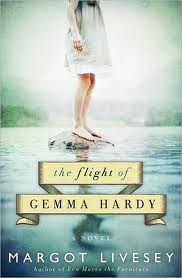
The Flight of Gemma Hardy: A Novel by Margot Livesey
Anyone who writes a book or makes a movie that reimagines a
classic has some serious cajones, as the slightest stumble brings out the
critics like cockroaches in the dark. The fact that I saw very few complaints
in the reviews of The Flight of Gemma
Hardy indicated to me that author Margot Livesey (pictured) must have done a pretty good job
of reimagining Charlotte Brontë’s Jane
Eyre. I, on the other hand, couldn’t tell you whether she did or not because
about the only thing I remember about Jane Eyre, which I read many years ago,
is that Jane was a stoic fortress in a life-long storm of misfortune, as is Gemma
Hardy.
Set in Iceland, Scotland, and the Orkney Islands off the
northern-most tip of Scotland during 1950-60’s, Gemma’s story begins when she
is orphaned in Iceland at the age of 3. She becomes the ward of her kindly,
pastor uncle in Scotland, who unfortunately soon dies, leaving Gemma in the
hands of the predictably wicked stepmother and progeny. Gemma gets tossed into
a boarding school that uses indigent students as slaves, but she trudges bravely
though that and a seemingly endless series of disasters involving the not
uncommon trials of life (i.e., love, poverty, work, betrayal) which would be
depressing if it weren’t for two things. CLICK ON READ MORE BELOW...
Our gifts are not by hard work or happenstance alone, by Judy Knotts, In Your Words
I met Very Smart Gal Judy
Knotts through Very Smart Gal Lynn Meredith and have come to admire her
thoughtful life, which includes being the Interim Head of St. Gabriel’s
Catholic School, a very active friend of the Austin homeless community, and an
occasional contributor to the Austin
American-Statesman. A couple of days ago I received an email from
Judy saying, “Because you don’t read the paper…” with her most recent editorial
attached. I loved the article so much that I asked if I could include it in my
blog. See below, reprinted with permission.
Our gifts are not by
hard work or happenstance alone
By Judy Knotts, In
Your Words
A simple pleasure is found in many cultures sitting around
the dinner table or communal fire after the evening meal and discussing life as
it unfolds. At first the conversation might center on things and people, but as
night falls, talk often turns to deeper questions. "Who are we? "What
is our purpose?" "Who writes the story we are enacting?"
Recently, I was invited to dinner at a friend's home. After
we had had our fill of delicious shrimp and pasta and cleared away the dishes,
we returned to the table to savor one last glass of wine and chocolate chip
cookies. These treats eased us into a meaningful conversation, and we began
delving into the age-old question of "Who is in charge of the world, of
us?"
Two opinionated people (one of them me) began sounding like
a chorus of dueling banjos, rarely letting each other finish a sentence,
instead grabbing hold of the topic or melody line and making it our own with a
flourish.
We each held strong views, which we flung in the face of the
other. "What about the starving child in sub-Saharan Africa, would a god
allow that?" my friend demanded.
I countered with the usual response of faith-filled people
that admittedly sounded a bit weak: "We can't understand these things. We
are merely human, not gods." CLICK ON READ MORE BELOW...
The hobby that got out of control . .
Very Smart Gal Elizabeth Ann Gates told me about Very Smart Gal Julie Sullivan and her "Dancing Cat Bindery." What a lovely skill, and I saw some wonderful gift ideas on her Dancing Cat Bindery website!
In the
early 90s Dallas-based bookbinder Julie Sullivan (pictured below) began taking evening classes
from local calligrapher and bookbinder Catherine Burkhard. Julie was simply
looking for a relaxing hobby to reduce the stress of a full-time, fast-paced
job in the hi-tech industry.
"I should have known something was up when I started
using vacation days from my job to take bookbinding workshops!"
In 1997 Julie left her corporate job and began working in
earnest to develop her bookbinding and book repair skills. She joined the Guild
of Book Workers and began attending annual educational conferences offered by
the Guild. She has attended conferences and workshops on specialized topics and
book repair techniques. In 2001 Julie traveled to Cambridge University in
England for her first international educational conference.
"Bookbinding is a craft in which one learns something
every day, either from your own experiences or by learning from experts."
CLICK ON READ MORE BELOW...
Sunday, July 22, 2012
The Tiger's Wife by Téa Obreht
I found my reaction to The Tiger's Wife by Téa Obreht more interesting than the
book itself. I’ll explain later, but
first I’ll tell you about the The Tiger’s
Wife, which isn’t about a tiger’s wife.
Set in 1990's Serbia, the story vaguely reflects Obreht's childhood that was impacted somewhat
by the Yugoslavian civil war. An observation about the book that apparently
resonated with lots of readers, as it appeared over and over again in reviews,
goes something like this: “The Tiger’s
Wife is about the stories we tell ourselves to help us understand death.”
I’m not sure if that statement is so much an accurate theme of the book as it
is just a catchy phrase.
Natalia, a
young doctor, is notified that her
grandfather, with whom she had a very close relationship, has died “mysteriously.”
The story weaves in and out of the present and the past as Natalia looks for clues
as to her grandfather’s death. In the
process, she relates her grandfather’s tale about a man he met who would not
die, and that of an escaped zoo tiger that haunted the grandfather's childhood village. And that is pretty much the book,
which is #1 of the several reasons I found my reaction to The Tiger's Wife more interesting than the book.
#2 – It seems that
once a book wins one award, more fall like dominos. As if critics don’t want to
be the one to not recognize brilliance. I, and half the world, fell for the
lavish praise of Obreht and her book. But when you look at the average Jane’s
reviews, they are all over the place with lots of comments indicating that the
reviews and recommendations were misleading. I too spent most of the book
looking for the promise of “channeled genius,” “astonishing intimacy” and a “searing”
novel. Click On Read More Below...
East Side Queens, Sue This! and LMurder-ith Rollin With The Homies
If Lynn Meredith and I joined the Hell Marys roller derby
team, we might take up monikers like “Sue This!” and “LMurder-ith” to join team
members Barbara Ambush, Lucille Brawl, Olivia Shootin’ John and The Killa Sal Monella.
Lynn had said that she wanted to go to a
Texas Rollergirls game some day. Last night that day arrived, and so did we.
The first thing I noticed when we walked into the Austin Convention
Center was that it was way too quiet. No chants of “Texas, Texas, Kill, Kill,
Kill!” No loud horns or slap sticks creating the usual Texas Rollergirl bouts’
cacophony. What was going on? Well after a few inquires, we found out that this
weekend wasn’t a regular season game, but rather a tournament including teams
from Austin (Texecutioners), New York (Gotham City Rollers), San Francisco (Bay
Area Roller Girls), and Chicago (Windy City Rollers). The teams skating the
first bout when we arrived at 6:30 were Chicago and New York, so not a lot of
home-team fans there to make a ruckus.
My rare trips to watch the Texas Rollergirls usually consists of
watching people and being clueless about what is going on. Well, that changed
last night when Lynn sat down, opened up her tournament program and set out to
educate us both on what the heck was going on on the track. Between
Lynn’s research, and with a little help from the gal sitting in front
of us, I learned more about roller derby last night than I’d gleaned from
several other trips to bouts.
Gotham City pretty much blew the Windy City Rollers off the track in the first round, but when the Texecutioners and the Bay Area Rollers bout began, it was
much more competitive and fun. Lynn and I yelled and clapped for the Texas team, and yelled over the din at each other about this and that and everything else.
Lynn kept checking her phone as her daughter is expecting to deliver
Lynn’s first grandbaby any day. I kept checking my phone worried about my
“home alone” husband, who although mostly recovered at this point, had suffered
two strokes in May. Suddenly I realized it was two hours past my bedtime, 9:30
pm, and we hadn’t even started the second half of our adventure – a trip to the
Liberty Bar in East Austin. Click On Read More Below...
Grammar Humor for the Literally Challenged
For those of us who glanced at the cover of East, Shoots & Leaves, by Lynne Truss, and assumed it was a book about pandas, here are some pretty funny grammar
jokes.
A Texan professor and an Oxford
professor are chilling at a conference bar. The Texan professor, bored, looks
to the Oxford professor and strikes up a conversation. "So there partner,
where y'all from?" Oxford prof. replies, pushing his glasses to his nose:
"Well, in reply to your query, I hail from Oxford. In addition, where I
come from, we never end our sentences in a preposition." The Texan prof.
blinks once, shrugs his shoulders and drawls, "My apologies! What I mean
to say is 'where y'all from, asshole?'"
A linguistics professor was lecturing to his class one day. "In English," he said, "A double negative forms a positive. In some languages, though, such as Russian, a double negative is still a negative. However, there is no language wherein a double positive can form a negative." A voice from the back of the room piped up, "Yeah, right."
Harry is getting along in years and
finds that he is unable to perform sexually. He finally goes to his doctor who
tries a few things, but nothing seems to work. So the doctor refers him to an
American Indian medicine man. The medicine man says, "I can cure
this." That said, he throws a white powder in a flame, and there is a
flash with billowing blue smoke. Then he says, "This is powerful medicine.
You can only use it once a year. All you have to do is say '123,' and it
will rise for as long as you wish" The guy asks, "What happens when I
don't want to continue?" The medicine man replies: "All you or your
partner has to say is 1234, and it will go down. But be warned - it will not
work again for another year."
Harry rushes home, eager to try out
his new powers and prowess. That night he is ready to surprise Joyce. He
showers, shaves, and puts on his most exotic shaving lotion. He gets into bed,
and lying next to her says, "123." He suddenly becomes more aroused
than any previous time in his life - just as the medicine man had promised. Joyce,
who had been facing away, turns over and asks, "What did you say 123
for?"
(And now you know why you shouldn't end a
sentence with a preposition.)
Wednesday, July 4, 2012
One Hundred Things My Mother Taught Me A Million Times – Chapter 89
#89 – “Socialize with people younger than yourself. It will
keep you young.”
All
of us have memories so crystalized that we remember the color of the air around
us, what we were wearing, where we were standing. One such moment for me was
the day I asked my mother why all her friends were so much younger. She said, “Because
they keep me young.” But I quickly realized the real reason mom hung out with people younger was because friends her
age were dead, and I think that was my first realization of my own
mortality. Life goes on, but not everyone is along for the ride.
What
must it feel like to watch your friends leave this world one by one? I remember feeling a little untethered when
my mom, my last remaining parent, died. And as the baby of my family, I think I’ll feel a similar loss,
when and if all my siblings go before me.
From
a less morose perspective, I can certainly relate to mom’s #89. It seems many people
my age, rubbed raw by the trials of life, can be cynical, grumpy and boring. So,
like mom, I gravitate towards young, optimistic, cheerful friends to buoy my
own attitude and to drag me out of my rut.
My
young and young-minded friends still believe in the possibilities of life, the
goodness of man and womankind, and the value of activism. They jump up and down
when they hear great music, are fearless and adventuresome, embrace
overindulgence, and stay up past 8 pm. All things I feel slipping from my grip.
Of
course I can’t give up my old, cynical, grumpy and boring friends because I’ve
fallen in love with them. They don’t
suffer fools, know when to hold ‘em and know when to fold ‘em, are packed full
of wisdom, always have your back, and don’t mind going to bed at 8 pm.
So
I have both old, cynical, grumpy friends, and young, optimistic, cheerful
friends, which is really nice.
Mom
was right. We should socialize with people younger than ourselves. And, I would
add, cling to and value friends who have stuck by us in spite of the fact that
we are old, cynical, grumpy and boring,
Have
a happy and safe 4th.
Summer Fun With Grandkids
I hope you will take 2 minutes to view this little video of two of our grandkids' week with us in Austin. Great Kids - Great Memories.
Little Princes: One Man's Promise to Bring Home the Lost Children of Nepal by Conor Grennan
Several decades ago, while managing a small dude ranch in
the mountains of New Mexico, I met an elderly woman who had served for five years in the Peace Corp after retiring from teaching. It never occurred to me that anyone over the
age of 25 would do such a thing. Since then I’ve harbored a secret desire
to “save the world” in some exotic location (with air conditioning). I've also become a sucker for stories about do-gooders, like Three Cups of Tea, and today’s book review, Little Princes: One Man's Promise to Bring
Home the Lost Children of Nepal by Conor Grennan.
Little Princes is
about Grennan’s founding of Next Generation Nepal, a non-profit dedicated to reconnecting trafficked children with their families, and to combating the root causes of child trafficking in rural villages in Nepal.
His adventure begins when he signs up to volunteer in a Nepalese orphanage as an excuse to take a sabbatical from his government job in Prague. He quickly falls in love with the little children in the orphanage and, when he discovers that the children were rescued from child traffickers, he becomes determined to return the children to their parents.
There are a number of conflicts in Grennan’s story that make it compelling. First is the issue of child trafficking. The fact that there are children held in dark basements for months with little food and no sanitation, and then sold into slavery, made me feel separated from reality and sheltered from the ugliness of humanity. It also made me want to toss my computer aside, sell my house and search door to door for unprotected children, which is pretty much what Grennan does in his story. But he soon runs into political and cultural barriers – corruption, poverty, ignorance, etc. – all part of the reality of why child trafficking persists. Click on Read More Below...
Thursday, June 7, 2012
Slactivism and Satire – Let’s Make Voting Sexy! By Very Smart Gal – Dean Lofton
I received the below very
smart commentary from Very Smart Gal, Dean Lofton's blog, and I immediately
forwarded it to Very Smart Guy (and old friend), Austin American-Statesman Editorial
Page Editor, Arnold Garcia. He liked it so much that he invited Dean to be a
guest commenter in the June 7 issue of the paper. Check it out. Very Smart -
and fun! (Reprinted with permission) Here's the
link to Dean's business (PR). After you read this, if you need a
publicists (who doesn't) I suspect you'll want to hire her!
Pssst. Hey Austin, know what's sexy and hip now? Voting!
I'm a little, um, frustrated with my Austin's low voter
turnout in the recent city elections on May 12.
The city clerk's office reports that of 824,205 residents,
only 461,146 were registered and only 49,336 of those actually voted. How
embarrassingly low for one of the most educated populations in an American city
that's also on the top of every "best of" list around!
It's understandable the majority of Austin residents have
tuned out politics. We're busy!
There are shows to see and festivals to attend.
And we already vote all the time best restaurant, music
polls and for our favorites on reality TV shows.
Shaming people with data and phrases such as "civic
responsibility" and "participation in the political process"
doesn't seem to motivate anyone.
We need a new plan so that we, the people, can actually be represented by the folks making the decisions.
One obvious way to inspire voter registration is to add
legalizing marijuana to the ballot and watch a "put down the bong and go
register to vote" campaign occur organically in mere moments.
CLICK ON READ MORE
BELOW...
Monday, May 28, 2012
One Hundred Things My Mother Taught Me A Million Times – Chapter 88
This is a recent photo of one of our many adorable grandchildren, Colt and Heather's little Ember Elizabeth. Please forgive me, but I just had to share.
#88 – “Never mash pimples.
You'll make scars.”
It is such a dirty trick that nature plays, causing teens to
have pimples at a point in their lives when they so desperately need to feel
good about themselves. What is that, a test, a measure of character, a character
builder? Whatever, it is just wrong.
I was one of the fortunate teens with relatively few
pimples, but I do recall fixating over, and “pinching” the ones I had, leaving
telltale fingernail dents and red dots. I also remember feeling diseased and
ugly, yet very fortunate that my pimples, zits, whatever you want to call them,
were minor compared to some of my friends’.
My generation possessed a comparative dearth of information about
just about everything, including pimples. All we knew was what our parents told
us, which was “wash your face and don’t pinch.” Then television entered our
lives about the time my friends and I were entering puberty, assuring us that Clearasil
and Noxzema would make our pimples magically disappear, which was a lie. Then
when my kids were teens, Accutane came along, with all the dire warnings that
it would cause birth defects, and pimples became a scourge of the past, if you
had the money to buy the Accutane that is.
When I Googled “acne” to see what I could learn, I got 128,000,000
results, which is mind-boggling. I found out
that the most common type of acne is “acne vulgaris” which seems crudely named.
What I didn’t realize is that vulgaris, which I associate with the word vulgar,
is actually the Greek word for “common.” The information online is vast,
interesting and helpful, but the photos are heartbreaking. Click On Read More Below...
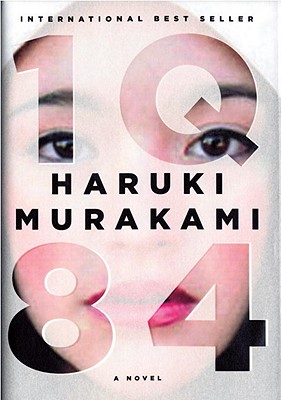
1Q84 by Haruki Murakami
At the risk of someone saying, "You didn't like 1Q84 because you are intellectually inferior," I'll say that 1Q84 is one of those books that people say they like, just to appear intellectually superior. Written by iconic Japanese writer, Haruki Murakami, who is probably most famous for Kafka On The Shore, 1Q84 was on several "best books of 2011" lists, and the book cover was pretty cool, so I decided to give it a chance. And for 925 pages I gave and gave.
The story, set in Tokyo, begins with main character, Aomame, on her way to a work assignment. When her taxi gets stuck in traffic, she decides to get out and walk, at which point she enters a parallel universe of sorts, representing one of two predominate perspectives that make up 1Q84 (first quarter of 1984). The other perspective is that of Tengo, an elementary school classmate of Aomame's she hasn't seen in 20 years, but with whom she unknowingly shares an unrequited love.
Outwardly, Aomame is a fitness instructor and yoga therapist, but she also has a secret occupation performing "jobs" for a wealthy dowager who maintains a safe house for battered women. Tengo is an aspiring writer who anonymously and illicitly re-writes a book, Air Chrysalis, that becomes a literary sensation.
1Q84 is about how Aomame and Tengo reunite through a series of events so surreal and disconnected that I felt I had to read on just to make sense of the story. The book includes plenty of elements that serve more to keep you awake than anything else, including a religious cult, a supernatural group of “little people” who come out of the mouth of a dead goat, double moons in the night sky, a fictitious place called “cat town,” several murders, and a good bit of sex. Click on Read More Below...
The story, set in Tokyo, begins with main character, Aomame, on her way to a work assignment. When her taxi gets stuck in traffic, she decides to get out and walk, at which point she enters a parallel universe of sorts, representing one of two predominate perspectives that make up 1Q84 (first quarter of 1984). The other perspective is that of Tengo, an elementary school classmate of Aomame's she hasn't seen in 20 years, but with whom she unknowingly shares an unrequited love.
Outwardly, Aomame is a fitness instructor and yoga therapist, but she also has a secret occupation performing "jobs" for a wealthy dowager who maintains a safe house for battered women. Tengo is an aspiring writer who anonymously and illicitly re-writes a book, Air Chrysalis, that becomes a literary sensation.
1Q84 is about how Aomame and Tengo reunite through a series of events so surreal and disconnected that I felt I had to read on just to make sense of the story. The book includes plenty of elements that serve more to keep you awake than anything else, including a religious cult, a supernatural group of “little people” who come out of the mouth of a dead goat, double moons in the night sky, a fictitious place called “cat town,” several murders, and a good bit of sex. Click on Read More Below...
Saturday, May 19, 2012
One Hundred Things My Mother Taught Me A Million Times – Chapter 87
#87 – “Never put your knives in the dishwater. You’ll cut
yourself.”
Most of the 100 things mom taught me again and again
are very practical, like #87. When I was young and she told me not to put
knives in the dishwater I would be so incensed! I was smart and agile. Only
graceless Dilberts would cut themselves on a simple kitchen knife! That was
approximately 30 or so knife cuts ago, none of which required stitches, but all
of which required the eating of crow.
Being the curious gal I am, as soon as I typed the
term eating crow I wondered where
and how it originated. As it turns out, the topic of
eating crow is pretty interesting. Eating crow is defined as a colloquial
idiom, two words I adore when written together. Yes, I know that is weird.
Of course eating crow is about admitting wrongness, (i.e., I was wrong in thinking I was too smart and agile to avoid cutting myself
on a knife dropped into the dishwater). Anyway, apparently crow is a particularly
foul-tasting fowl, to wit eating crow, admitting wrong, is distasteful. The
British idiom, eating humble pie, has the same connotation, but the association
goes even deeper as “umbies,” the intestines, offal and other less valued meat
of deer, were made into pies to serve to those of lesser class who didn’t eat
at the table of the king/lord/governor. CLICK ON READ MORE BELOW.
The Informationist by Taylor Stevens
I’m getting tired of Texans being portrayed as illiterate
gun freaks or morally bankrupt oil bazillionaires in what seems like every
other book or movie. First off, Texas is a fine state with fine people. Second,
not all hunting enthusiasts are illiterates or freaks! And finally, I’ve known
a few oil magnates that were way nicer than some arrogant pseudointellectuals.
So, now that I’ve got that off my chest, I’ll tell you about
The Informationist by Taylor Stevens which
is full of such clichés, but a pretty damn good thriller otherwise.
Michel Munroe, the main character in the book, was raised in
Cameroon (west coast of Central Africa) and became a gun-and-drug runner at the
age of 14. Author Stevens interestingly wrote Michael as a rather atypical hero with tons of flaws, like a not fully explained compulsion to kill people in particularly sadistic and gory ways. And yet I can see Michael
becoming a serialized character
in many future "Michel Munroe" books. Although it is fairly standard that
the protagonist of a thriller be uncannily skilled, Michael is so much stronger, faster, smarter, and a better shot than everyone else in
the book, that it requires a major chasm leap of faith by the reader.
Oh, and did I mention that Michael is a woman? Of course she is also thin, beautiful and heterosexual.
Sunday, May 13, 2012
One Hundred Things My Mother Taught Me A Million Times – Chapter 86
#86 – “Look for meat or poultry with plenty of fat, that's
where the flavor comes from. You can
drain the fat off later.”
Fat
gets a bad rap. Mom taught me that it’s not about what you eat; it’s about how
much. Mom emphasized and science confirms, by the way, that fat provides the
flavor while overindulgence provides the death. Research also shows that despite the fact that
Americans have steadily decreased their consumption of fat, they have also
steadily increased their consumption of calories as a result of food manufacturers replacing the natural fats in foods with sugar or some other taste-altering substance.
Science also says, "The human body has a natural affinity for fat because it adds taste to food and, more importantly, it helps the body absorb key vitamins such as A, D, K, and E. Fat also adds a sense of satiety we get from foods." Have you noticed that many of the trendy diets we've seen over the past two decades have recommended pork rinds as a snack food? That's because they satisfy that hardwired instinct for fat, and are much less harmful than sugar and carbohydrates.
But honestly, the older I get the more I realize that we are really just rats in the laboratory of life. Each time science emerges with new breakthrough research I just label them the "theory de jour." Logic seems the only constant. If you eat too much, you'll get fat. It really is just that simple. Click On Read More Below...
Science also says, "The human body has a natural affinity for fat because it adds taste to food and, more importantly, it helps the body absorb key vitamins such as A, D, K, and E. Fat also adds a sense of satiety we get from foods." Have you noticed that many of the trendy diets we've seen over the past two decades have recommended pork rinds as a snack food? That's because they satisfy that hardwired instinct for fat, and are much less harmful than sugar and carbohydrates.
But honestly, the older I get the more I realize that we are really just rats in the laboratory of life. Each time science emerges with new breakthrough research I just label them the "theory de jour." Logic seems the only constant. If you eat too much, you'll get fat. It really is just that simple. Click On Read More Below...
Those Guys Have All the Fun: Inside the World of ESPN by James Andrew Miller, Tom Shales
Although
I rarely watch sports on TV, I love to read about sports. When I saw Those
Guys Have All the Fun: Inside the
World of ESPN I couldn’t wait to read about the who’s and how’s, and
the first 350 pages were absolutely fascinating. Unfortunately, the book was
748 pages long - a tome, a doorstop, a trotline weight. The other unfortunate
thing about this book is that those guys really weren't having any fun (stuck
in Bristol, Connecticut, working 24-7, and at each other's throats constantly), and neither does the reader.
I
suspect that those who read the hard cover had strained wrists by the end, just
as those of us who listened to the audio version had strained patience from
listening to a play-by-play that went into waaaayyyy too much
detail. This book could have easily been edited down to a really good 500
pages. Instead, it is a mediocre 748-page hardcover and 16-hour audio.
The
insight into the birth and growth of the ESPN sports empire, and the juicy
behind-the-scenes corporate boardroom entanglements were pretty interesting,
but you sure had to slog through a lot of minutia to get the story.
Here
are a few highlights of the ESPN rise to sports broadcast dominance:
- Bill and Scott Rasmussen (father/son), who have virtually no experience with sports or broadcasting, borrow $20,000 from friends and family in 1978 to buy a transponder on RCA SATCOM, and ESPN was born. Seriously!
- Getty Oil invests $15 million in 1979 and ESPN stumbles towards success.
- ESPN gets TV rights to NFL games in 1987 and ESPN is sling-shot towards success.
- ESPN gets TV rights to Major League Baseball in 1989, and the rest is history.
Subscribe to:
Posts (Atom)