Thursday, January 24, 2013

2012 Best Books List Digest (From Other Sources)


I am always curious about what other people are reading. So I researched numerous sources of "best books of 2012," and although some of my 2012 favorites were on many of those lists, most were not. There were a number of books not on my list that kept popping up on other best of lists. Being the eternal, nieve optimist, I assume they must be good! So here's are the top 19:
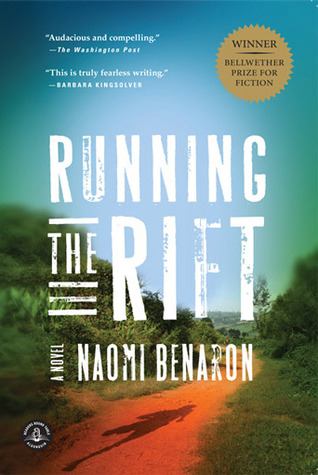


Running The Rift, by Naomi Benaron 


People Who Eat Darkness: The Fate of Lucie Blackman, by Richard Lloyd Parry


The Casual Vacancy, by J.K. Rowling


Mr. Penumbra's 24-Hour Bookstore, by Robin Sloan


The Passage of Power, by Robert A. Caro


The Round House, by Louise Erdrich


Behind the Beautiful Forevers: Life, Death, and Hope in a Mumbai Undercity, by Katherine Boo


The Yellow Birds, by Kevin Powers


Where'd You Go, Bernadette, by Maria Semple


The Light Between Oceans, by M.L. Stedman


The Age of Miracles, by Karen Thompson Walker 


A Grown-Up Kind of Pretty, by Joshilyn Jackson 


The Dog Stars, by Peter Heller


In the Shadow of the Banyan, by Vaddey Ratner 


Billy Lynn's Long Halftime Walk, by Ben Fountain


Flight Behavior, by Barbara Kingsolver


Prague Winter: A Personal Story of Remembrance and War, 1937-1948, by Madeleine Albright


Let's Pretend This Never Happened: A Mostly True Memoir, by Jenny Lawson


Bring Up the Bodies (Thomas Cromwell, #2), by Hilary Mantel 


Monday, January 21, 2013

The Best American Science and Nature Writing, Edited by Dan Ariely


Each January I can barely wait to purchase three books of The Best American Series: The Best American Science and Nature Writing, The Best American Sports Writing, and The Best American Travel Writing. The Best American Series is the premier annual showcase for the country’s finest short fiction and nonfiction published in North American during the previous year, and chosen for inclusion by recognized writers within each given field. Today’s review is of my personal favorite, The Best American Science and Nature Writing, 2012, presented by guest editor, Dan Ariely (pictured), Duke Professor, and probably best know as the author of best seller, Predictably Irrational. 

Articles chosen annually for The Best American Science and Nature Writing tend to come from Scientific American, Discover, National Geographic, Outside, Popular Science, and Wired. And all genres of The Best American Series typically include a heavy dose of writing featured in The New Yorker and The Atlantic, which speaks to the publication standards of those two magazines.

Whether you have any interest in science or not, the annual articles published in The Best American Science and Nature Writing are easily digestible, and if you’re an armchair scientist like me, they are fascinating. For example, David Dobbs’ article in National Geographic, Beautiful Brains, in which he explains that although the dangerous risks taken by teen children cause their parents’ hair to turn gray overnight, risk taking is fundamental to the development of the brain, generates better adaptive abilities, and thus an improvement to the species. If early man hadn’t taken risk, we probably would even be around. Here’s an excerpt that further examines the intriguing peculiarities of developing teen brains:  CLICK ON READ MORE BELOW...

Saturday, January 19, 2013

One Hundred Things My Mother Taught Me A Million Times - Chapter 97


#97 “Don't ever throw clothes away or give them away or sell them. Give them to your sisters.”
I saw this beautiful night photo of the Austin skyline on FaceBook and had to share.

There’s a bag of nice clothes sitting in the dinning room that I intend to take to my daughters-in-law, even though I know they probably won’t want the items in that bag. They are in their 30’s-40’s and I’m 65. They wear much smaller sizes then I.  They haven’t surrendered to elastic-waist pants yet. But mom’s #97 demands that I at least try.

My daughter has already gone through the items and picked out a couple of things, probably just to make me feel good. My sisters and I barely give a damn about clothes at this stage of our lives. There was a time, however, when my wardrobe was very important. A time when how I looked somewhat defined my capabilities and my standards. I was on that ladder to success, in heels. Figuring out how to look classy on a budget was a major focus.

One of the fun-est wardrobe/budget-stretching ideas I ever came up with was a “clothing swap” party. Most of my gal-friends were also on that ladder and pinching pennies to look professional. They bought high-end suits that were too expensive to give away, but they were tired of wearing the same three suits every week. So I invited them to bring their suits, purses, jewelry and shoes over to my house to do some high-end swapping. I served Champagne and snacks as each gal arranged her barter items in a small area. The first 30-40 minutes were spent just checking out each mini-boutique of offerings. Then, lubricated by bubbly, the negotiations began.

Some sold items for great prices, some swapped, and what was left over was donated to the Center for Battered Women. Everyone left with at least one “really good deal,” or something they truly loved. Lots of gals got to know each other better (negotiating tends to take conversations to a whole different level), and fun was had by all.

So mom was right, don’t throw away clothes, get your “sisters” together and give them the gift of new clothes and new friendships.

14 by Peter Clines


When main character, Nate finds a great apartment in Los Angeles for a ridiculously low monthly rent, he and I both should have known something screwy was going on. But to be fair, I bought 14 by Peter Clines (pictured below) fully aware that it was sci-fi.

Soon after moving in Nate meets his neighbors over beers on the rooftop terrace, and they began comparing notes about the many strange characteristics of their apartment building, like no electrical wires coming into the building, padlocked doors, weird floor plans and iridescent green cockroaches. As they bond (the tenants not the cockroaches) they form a sort of Scoobey Doo vigilante group to snoop around, and what starts out as an adventure, slowly (very slowly) turns dark.

Lamentably, the reader has to slog through some meaningless narrative to get to the fun stuff. Of course Clines was building tension, but there were a couple of annoying plot lines that lent nothing to the story, like Nate's boss repeatedly droning on and on about Nate's lack of productivity at work.   

And then there was the clichéd cast of characters. Nate, the endearing screw-up, his smarter than he girlfriend, the macho dude who knows way too many spy tactics, the bawl-baby woman, the wimpy guy who finds his strength in the end, etc.

My main complaint, however, is that 14 cruises along as a pretty good mystery, then crescendos to a laughable apocalyptic fantasy. As one reviewer observed, “You have to drink the Kool-Aid for this plot to work.” Another reviewer said he felt like the lemming at the bottom of the cliff, as did I, but then I have to give the author his due for keeping us on board in spite of a few dragging plot lines, predictable characters, and the comical antagonists.

Read it? Sure, 14 is a fun break from high-end literature.